General Information About Beavers
Beavers (Castor canadensis) are the largest rodent species in North America and weigh 40 to 60 pounds. They are semi-aquatic animals that spend most of their time in rivers and streams. Beavers are equipped with several unique features that allow for easy navigation in water. Webbed hind feet assist in swimming; dense fur acts as insulation in cold water; ear and nose openings are designed to close when submerged; and a broad, flat tail functions in swimming, dam building, and communication.
Beavers are nocturnal social animals that live in family groups and mate for life. Females give birth in the spring, usually to three or four kits. Both parents, as well as year-old siblings, care for the newborns. At the age of two, offspring leave the family unit in search of their own breeding territory. The lifespan of a wild beaver is approximately 10 years.
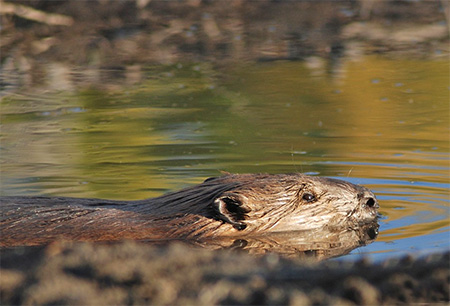 Beavers create dams to raise water levels so they can build their homes, or lodges, in the water. By effectively creating an island with an underwater entrance, they are protected from many predators. The entrance leads to dry chambers where beavers sleep, give birth, and store food for future consumption. These animals may also create burrows in riverbanks.
Beavers eat the leaves, roots, cambium, and bark of trees such as aspen, willow, and cottonwood. They also eat clover, apples, corn, grasses, water lilies, and other aquatic vegetation. A beaver’s teeth will grow throughout its lifetime; gnawing on trees keeps them from overgrowing.
Beavers have many natural predators, including: wolves, coyotes, bears, mink, lynx, bobcats, cougars, raptors (which kill juveniles), and humans. Humans are, in fact, one of the biggest threats to beavers. Trapping, water pollution, and habitat loss through drainage of wetlands, are common occurrences that negatively affect beaver populations.
The Importance of Beavers
Beavers are a keystone species. This means their presence in nature greatly affects other wildlife. In fact, the removal of beavers from their natural setting leads to a decrease in habitat quality. As a result, fewer wildlife species are able to utilize the area.
- Beavers build dams and create wetlands upon which many species depend. In fact, almost half of all endangered and threatened species in North America rely on wetlands to survive, and eighty five percent of all North American wild animal species depend on wetlands.
- Beavers help purify and control water by filtering silt from the water bodies in which they live. This increases water purity and decreases the need for filtration systems. Beaver dams can also slow flood waters. Higher water tables, less erosion, and cleaner water result from beaver dams. Beavers may also aid in containing forest fires; by converting streams to larger bodies of water , these can serve as both a fire line and water supply to fire fighters.
- Beavers can serve as “ecological indicators.” Their presence in an area lets us know the ecosystem is healthy.
The U.S. Fish and Wildlife Service’s Partners for Wildlife program may supply funding and/or materials for a beaver water level control device. Please look at the website for information and the application.
Download our Beaver Resources for a Better Environment guide [5 MB PDF]
 Also see:

Beaver Links
Please visit these links for more detailed information regarding beavers and the construction of flow devices.
Other Resources
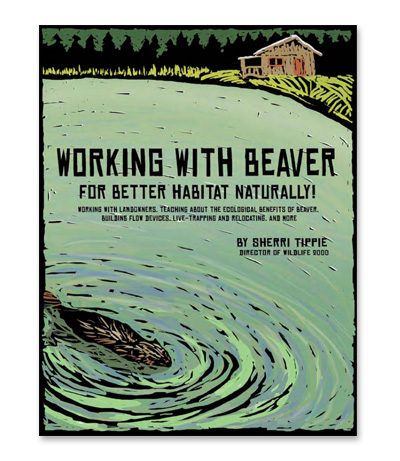
Working with Beaver for Better Habitat Naturally by Sherri Tippie – This guide, includes information on ecological benefits of beaver as well as construction of flow devices and protection of trees and other property.
The Best Beaver Management Practices: Long Term Solutions to Beaver Dam Flooding by Beaver Solutions, LLC – This DVD details construction of flow devices for property owners. Available for purchase at Beaver Solutions.